The film Chinatown directed by Roman Polanski takes place and was filmed in the 1970’s. This film was set in L.A. and uses an excellent postmodern film demonstration to get the theme of the film across to the viewers. The film also uses pastiche to imitate L.A. in the 1970’s and blends genres as well as gives an absolutely outstanding ending that does not provide much closure for the viewer. These characteristics found throughout the film are all examples of postmodern film and how it was used during this period of film history.


The images listed side by side above are fantastic examples of postmodern film. The image on the left is an actual image of L.A in 1979. The image on the right is from the film Chinatown. There are many similarities between these two images and how they portray L.A. By looking at the images it is easy for a viewer to see the extreme color similarities. Both images use blue, beige and yellow hues to present that vintage look and theme that was so popular during this time. However the image on the right from the film seems to exaggerate those colors schemes and create a light and uplifting feel to the image which is almost complete opposite to the direction the film takes after this scene. By exaggerating the colors and feel of L.A. in the 1970’s the film is portraying a skewed reality which is a characteristic of postmodern film.
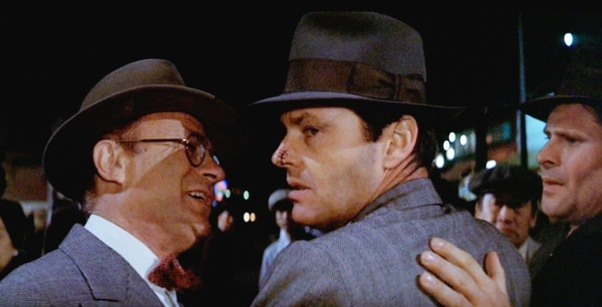
One of the most evident examples of postmodern film found in Chinatown takes place at the very ending of the film. During the 1970’s many films that were released presented happy endings. Many films gave a very commercialized example of how L.A. was in the 1970’s and presented a feel good story line to the films viewers. However the 1974 film Chinatown takes an entirely different approach to this film style. At the very end of the film where Jake Gittes should have been able to save the women, Evelyn Mulwray, an unexpected turn takes place to end this very dark toned film. Evelyn Mulwray is shot in the head and killed in the drivers seat of her car with her daughter next her and Jake Gittes watching her leave. This tragic ending drifts far from the ending of other films during this time era. Another great example takes place in this very scene right after Evelyn is killed and Jake is overwhelmed by the situation when Jake’s partner looks at him and says “Forget it Jake, It’s Chinatown.” This turns the entire film around and makes all of Jake’s hard work look as if it was for nothing. He had come this far only to watch Evelyn die and not be able to do anything about it. This ending is considered an ending without closure. There was not any closure for the viewers of the films as well as for Jake. He was unable to get his closure regardless of all the work he did to solve the case, the murderer still got away with everything right in front of him. These are all great example’s of the films excellent usage of postmodern film as well as pastiche.

 Adrienne’s Film History Blog