Do The Right Thing

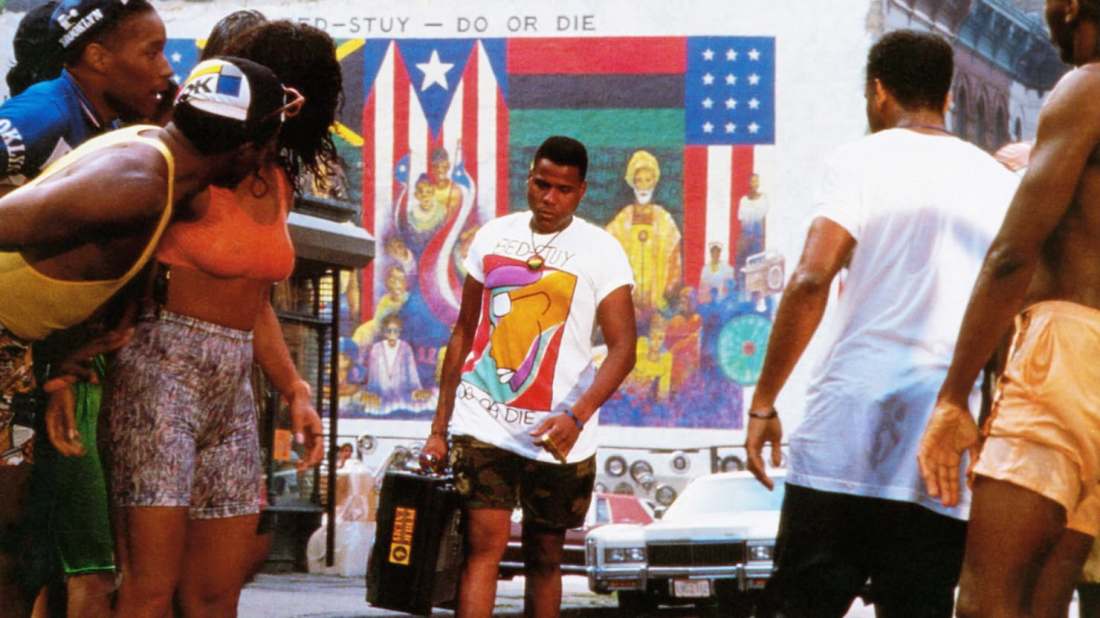
In the film Do The Right Thing directed by Spike Lee there are many different examples of Reception Theory. Some of these examples include the clashing of three different minorities living in the same vicinity including Italian Americans, African Americans as well as Puerto Ricans. These three minority groups are found expressing their opinions openly, loudly and proudly throughout the film so they can get their voices heard. Other factors of Reception Theory found throughout this film is the usage of cultural identity and interpretative community found throughout the ways different viewers view the film.

Sals
“Do The Right Thing.” This Recording , Brittany Julious, 24 June 2009, thisrecording.com/today/tag/do-the-right-thing.

In the film Do The Right Thing, the story follows Meek, who is an African American male during this time, the late 1980’s. Meek lives in a low income community with other minority groups including the Italian Americans such as the man he works for. Meek works for a man named Sal at his Italian pizza shop and it is clear for viewers to see the way Sal treats and uses his African American costumers and workers to make a profit. Sal’s pizza is great and he claims to have fed all the African Americans in the neighborhood with his pizza for their whole lives. This implies that Sal’s business thrives off of their service and he care not for the African Americans well being and serving them great food however he values their money contributing to his business above all else.
161026-townsend-do-the-right-thing-tease_lrr7va
“Radio Raheem.” The Criterion Contraption, Matthew Dessem, 22 Mar. 2010, criterioncollection.blogspot.com/2010/03/97-do-right-thing.html.

Another great example of Reception Theory found throughout Spike Lee’s film is the role of police brutality. After Radio Raheem refuses to be put into handcuffs after his fight with Sal he is choked to death on the street next to the pizza shop by the police in front of everyone. This brutal yet raw example of police brutality could be related to more closely with African American viewers. Unfortunately, this example of police brutality can still be relatable to African American viewers today with the Black Lives Matter Movement. This film also surpassed it’s time. The film came out in 1989 when Hollywood was still making films primarily based off of white leads and African American actors as secondary roles, if that. However Spike Lee chose to be brutally honest and portray the hard truth and reality of racial discrimination, oppression as well as police brutality during this time.

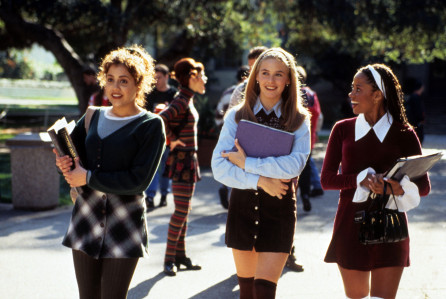
Clueless and the Feminist Film Theory

The film Clueless directed by Amy Heckerling exhibits many different examples of Feminist Film Theory. The entire film is based off of stereotypes including the dumb blonde, privileged California students and the expectations on young women’s behaviors with men. The director of this incredible film, Amy Heckerling, seems to stray from the negative aspects of feminist film theory such as replacing the sexualized male gaze with attractive yet conserved young female actresses. Although there are many positive examples of feminist film theory found throughout this film there is also quite a few negative examples of feminist film theory.

clueless 3
“Cher.” Movie Mans Guide, Brian Oliver, 8 May 2012, moviemansguide.com/main/2012/05/review-clueless-bd/.

To focus on the positive examples of feminist film theory the audience can see a strong, independent, confident and out spoken female lead. Cher is the main character in this film and she is a passionate one. Although she comes across as the typical dumb blonde seen in many other films, Cher is compassionate and has a knack for leading and helping her fellow female friends. Her bubbly and out spoken personality allows her to negotiate her way to changing any test grade. This shines a positive light on this female lead for many reasons. Her father is a litigator and encourages Cher to take initiative and use constructive and powerful arguments to make her way through the world. This encouragement implies that her father wants his daughter to be successful, smart and powerful in her life and future career. By encouraging Cher’s successful future her father is viewing her as an equal in society and not categorizing her into a female role by encouraging her to learn to cook or clean so she can be suitable to marry.

Clueless - 1995
“The Girls.” Deadline, Greg Evans , 9 Oct. 2018, deadline.com/2018/10/clueless-musical-off-broadway-full-cast-dove-cameron-dave-thomas-brown-1202479429/.

Along with the many positive examples of feminist film theory in the film Clueless there are also quite a few negative examples. Some of these negative examples can be found in the stereotypes the film portrays. When new student Tai enters Cher’s high school she is immediately uncomfortable with who she is and feels the need to entirely change herself in order to fit in. Tai’s need to fit in goes beyond become popular, her need to fit in is revolving around the idea that she needs to find a boyfriend. So with help from Cher, Tai changes her vocabulary, her outfits, her makeup and her body image to adapt to what a boy would want to have in a girlfriend. The idea that fitting in for young women meant changing who they were to please a guy is an extremely negative viewpoint in the feminist film theory. Although there are both positive and negative aspects of feminist film theory in Clueless both work together to create this epic female dominated film.

Hitchcock

The English film director Alfred Hitchcock uses outstanding examples of Film theory throughout his films. Two of these films include Psycho  an Vertigo. Both of these films demonstrate similar characteristics which are unique in their own way and only found throughout Alfred Hitchcock’s films. Some of these examples of film theory include Hitchcock’s use of eyes, jealously, close up shots as well as the usage of birds. Each element is found to be crucial throughout these two Alfred Hitchcock films.

bitch
“Psycho.” Edward Copeland’s Tangents, Edward Copeland , 16 June 2010, eddieonfilm.blogspot.com/2010/06/oh-god-mother-blood-blood.html.

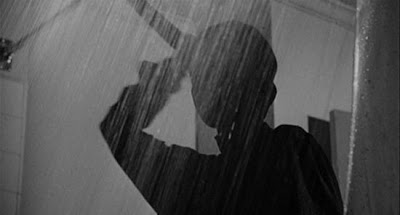
Alfred Hitchcock uses birds and eyes in his film to portray a sense of stalking or watching. Hitchcock uses close ups on the characters eyes in Vertigo to demonstrate the feeling that the characters were constantly being watched and were constantly under the pressure f being seen or caught in some the activities they were partaking in.  This same theme can be found in his film Psycho. Normans obsession with birds mirrors the way he and his mother watch over the people who enter the motel. This analogy works exceptionally well and because of the expression “I’m watching you like a hawk.” The audience can see examples of this throughout the scenes where the mother is lurking from the window in the house and when Norman is looking through a peephole into the room next door. Both of these themes are portrayed vividly throughout both of Hitchcock’s films which is a great example of Hitchcock’s unique sense of film theory found in his work.

VERTIGo.jpg
“Vertigo.” Indie Outlook, 22 June 2016, indie-outlook.com/2014/06/22/herrmann-hitchcock-symphony-of-suspense/comment-page-1/.

An extremely common theme found throughout both of Alfred Hitchcock’s films Psycho and Vertigo is the theme of fierce and deadly jealously and obsession. The usage of jealously is easily examined in Hitchcock’s film Psycho throughout the use of Normans mother. Norman’s mothers obsession for him is terrifying and she goes to the extremes to keep the attention of her son even if this leads to her committing countless murders. This theme of obsession can also help the viewer to better understand the usage of birds. Just as the birds are always watching so is the mother. This theme of jealousy and obsession is also found in Hitchcock’s film Vertigo. When John falls in love with Madeline his obsession of her grows. This only increases after her “death” when he persuading another women to dress, act and talk like her so he can pretend she is still there. When the women grows jealous of his dead fantasy women her envy eventually leads her to her death. This gives the film a repetition theme. Both films are extremely similar and add to Hitchcock’s unique usage of film theory.


The Shining

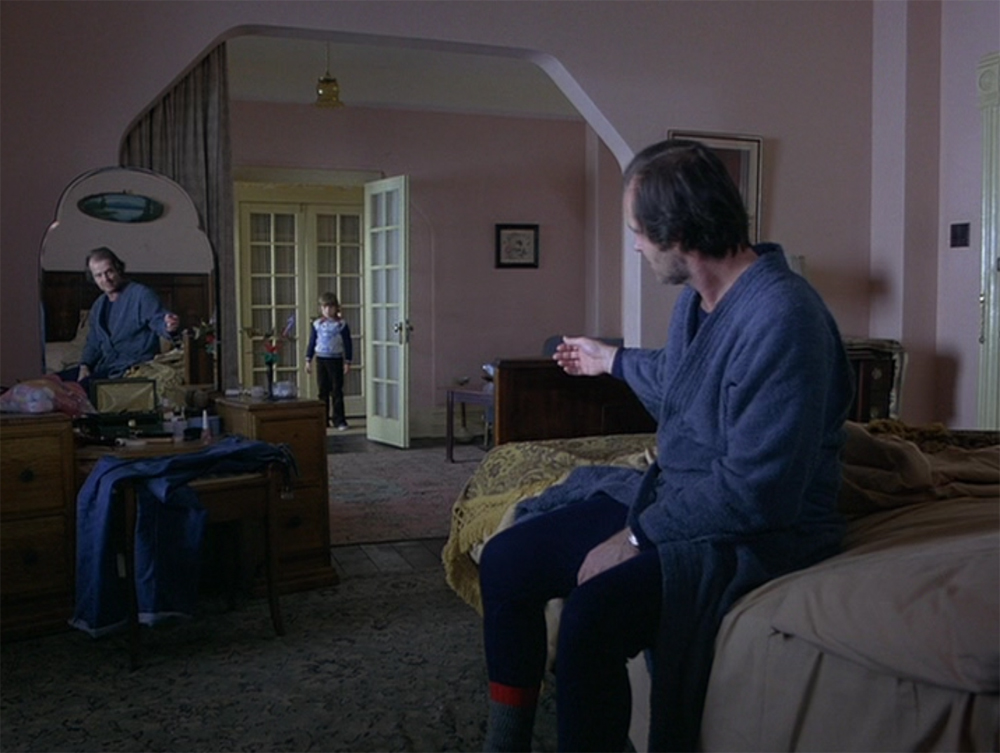
Mise en Scene:

mise en scene danny
“Danny’s Toys.” Feel Guide, Brent Lambert, 26 Sept. 2013, http://www.feelguide.com/2013/09/26/watch-stephen-king-explain-where-danny-torrance-from-the-shining-is-now/.


mise en scene maze
“Jack and the Maze.” Wild Sound Film Making, 7 Aug. 2016, http://www.wildsound-filmmaking-feedback-events.com/the_shining_maze.html.


Narrative:

act one.jpg
“Closing Day.” Shining The Shining, http://www.shiningtheshining.com/03_closingday/closingday_073.html.


act 3
“Jack Frozen.” Screen Prism, Jeff Saprotio, 8 June 2015, screenprism.com/insights/article/how-does-the-ending-of-the-shining-differ-from-stephen-kings-novel.


Editing:

editing
“Thursday.” Idyllopus Press, Juli Kearns, idyllopuspress.com/idyllopus/film/shining_thursday.htm.


editing 2
“Danny’s Tricyle.” Mental Floss, Meradith Danko, 28 Oct. 2018, mentalfloss.com/article/55893/25-things-you-might-not-know-about-shining.


Cinematography:

cinematography hallway
“The Girls.” Slash Film, Christ Evangelista, 1 Oct. 2018, http://www.slashfilm.com/doctor-sleep-the-shining-sequel/.


cinematography johnny.png
“Here’s Johnny .” Mental Floss, Meradith Danko, 28 Oct. 2018, mentalfloss.com/article/55893/25-things-you-might-not-know-about-shining.


Sound:

sound bed 1
“Jack and the Mirror.” Idyllopus Press, Juli Kearns, idyllopuspress.com/idyllopus/film/shining_monday.htm.


sound bed 2
“Jack and Danny .” Bloody Disgusting, John Squires, 23 May 2018, bloody-disgusting.com/movie/3500552/mike-flanagans-sequel-shining-will-reunite-us-danny-torrance-2020/.


Genre:

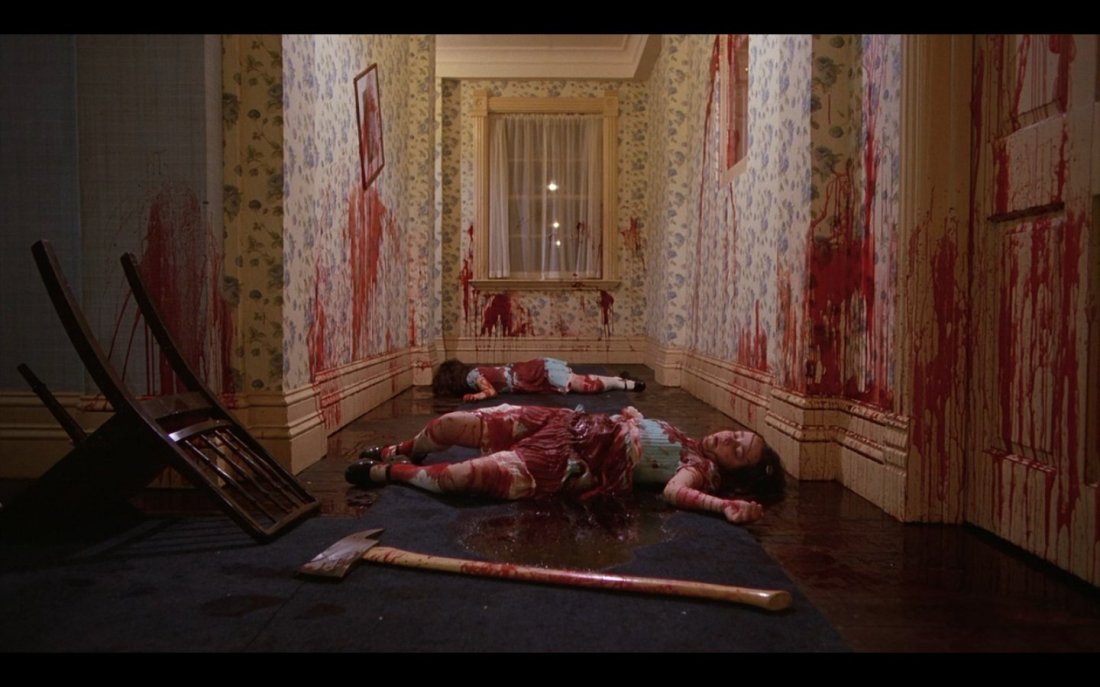
genre twins
“The Dead Girls.” IMDB, http://www.imdb.com/title/tt0081505/mediaviewer/rm4198112512.
genree
“The Typewriter.” Viddy Well, Aaron Haughton, 20 Aug. 2018, http://www.viddy-well.com/top-5/fun-facts-about-the-shining


Mulholland Drive

In the film Mulholland Drive directed by David Lynch there are many examples of Meta Film that can be found throughout the entire film. Some of these examples can be seen throughout the characters displayed in the film. Their dreams, motives and personalities reflect the hectic atmosphere found in the modern day film industry. Other examples of Meta Film found throughout Mulholland Drive include the characters struggles and how they each relate to each other along with the setting of the films such as the mysterious casting threats made towards the director during the beginning stages of the filming process.

director
“The director.” Slash Film, Joshua Meyer, 21 Sept. 2017, http://www.slashfilm.com/is-mulholland-drive-the-greatest-film-of-the-21st-century/.

The film Mulholland Drive uses an excellent example of Meta Film by exposing the corruptness found inside of the film making industry. The film uses screen writing characters as well as directing characters to show the real struggle of getting a film made. During the creation of the director’s , Adam Kesher’s, film he is trying to impress some very temperamental and rich members of the film making industry. He begins to lose his mind and do chaotic things in reaction to the fact that his film making processes is so stressful. One great example of Meta Film through this takes place when Adam begins to become threatened about who to cast for the lead in his film even though it is not the girl he truly wants. This directly relates to and exposes the intense ways the film making industry dictates specific films and uses corruption to do so which is a great example of Meta Film.

betty
“Betty.” No Film School, John Fusco, 13 Sept. 2017, nofilmschool.com/2017/09/watch-what-do-when-your-actor-isnt-quite-getting-it.

The character of Betty is also an excellent example of the films usage of Meta Film. Betty is a young girl with a big dream to be a fantastic and famous actress. Her dreams seem to get the best of her as she begins to fall into the corrupt system of the film industry. The character of Betty is quite confusing and hypnotic which describes the way Betty is feeling throughout the film. Although the film starts out with young and pretty Betty it ends with a drug addicted Hollywoodized reality of the actress she has become, or will become throughout her career. It seems as though she is older and has become a corrupt part of the movie making industry and she has begun to dream of how young and excited she used to be when she first started her acting journey. By portraying this raw image of what Betty has turned into shows the viewers what real life actors and actresses are like and what they go through beyond the screen which is another brilliant example of Meta Film.

Chinatown

The film Chinatown directed by Roman Polanski takes place and was filmed in the 1970’s. This film was set in L.A. and uses an excellent postmodern film demonstration to get the theme of the film across to the viewers. The film also uses pastiche to imitate L.A. in the 1970’s and blends genres as well as gives an absolutely outstanding ending that does not provide much closure for the viewer. These characteristics found throughout the film are all examples of postmodern film and how it was used during this period of film history.

The images listed side by side above are fantastic examples of postmodern film. The image on the left is an actual image of L.A in 1979. The image on the right is from the film Chinatown. There are many similarities between these two images and how they portray L.A. By looking at the images it is easy for a viewer to see the extreme color similarities. Both images use blue, beige and yellow hues to present that vintage look and theme that was so popular during this time. However the image on the right from the film seems to exaggerate those colors schemes and create a light and uplifting feel to the image which is almost complete opposite to the direction the film takes after this scene. By exaggerating the colors and feel of L.A. in the 1970’s the film is portraying a skewed reality which is a characteristic of postmodern film.

jack
“Ending Scene of Chinatown.” Quora, Robert Shaus, 21 May 2017, http://www.quora.com/Why-is-the-ending-of-Chinatown-especially-the-last-line-so-good.

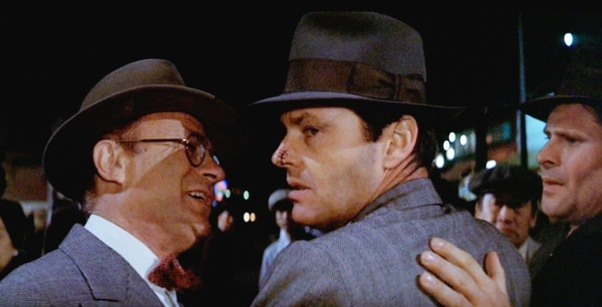
One of the most evident examples of postmodern film found in Chinatown takes place at the very ending of the film. During the 1970’s many films that were released presented happy endings. Many films gave a very commercialized example of how L.A. was in the 1970’s and presented a feel good story line to the films viewers. However the 1974 film Chinatown takes an entirely different approach to this film style. At the very end of the film where Jake Gittes should have been able to save the women, Evelyn Mulwray, an unexpected turn takes place to end this very dark toned film. Evelyn Mulwray is shot in the head and killed in the drivers seat of her car with her daughter next her and Jake Gittes watching her leave. This tragic ending drifts far from the ending of other films during this time era. Another great example takes place in this very scene right after Evelyn is killed and Jake is overwhelmed by the situation when Jake’s partner looks at him and says “Forget it Jake, It’s Chinatown.” This turns the entire film around and makes all of Jake’s hard work look as if it was for nothing. He had come this far only to watch Evelyn die and not be able to do anything about it. This ending is considered an ending without closure. There was not any closure for the viewers of the films as well as for Jake. He was unable to get his closure regardless of all the work he did to solve the case, the murderer still got away with everything right in front of him. These are all great example’s of the films excellent usage of postmodern film as well as pastiche.


Silence of The Lambs

In the film Silence of The Lambs directed by Jonathan Demme there are many elements of narratology present in the story line. Some of these elements include narrative traditions such as the cause and effect logic as well as a clear display of the Three Act Story Structure and the film also uses an alternative narrative that undermines the centrality of the main character.

jodie
Clarice Starling. Hunter, 18 Feb. 2014, thesouloftheplot.wordpress.com/2014/02/18/the-silence-of-the-lambs/.

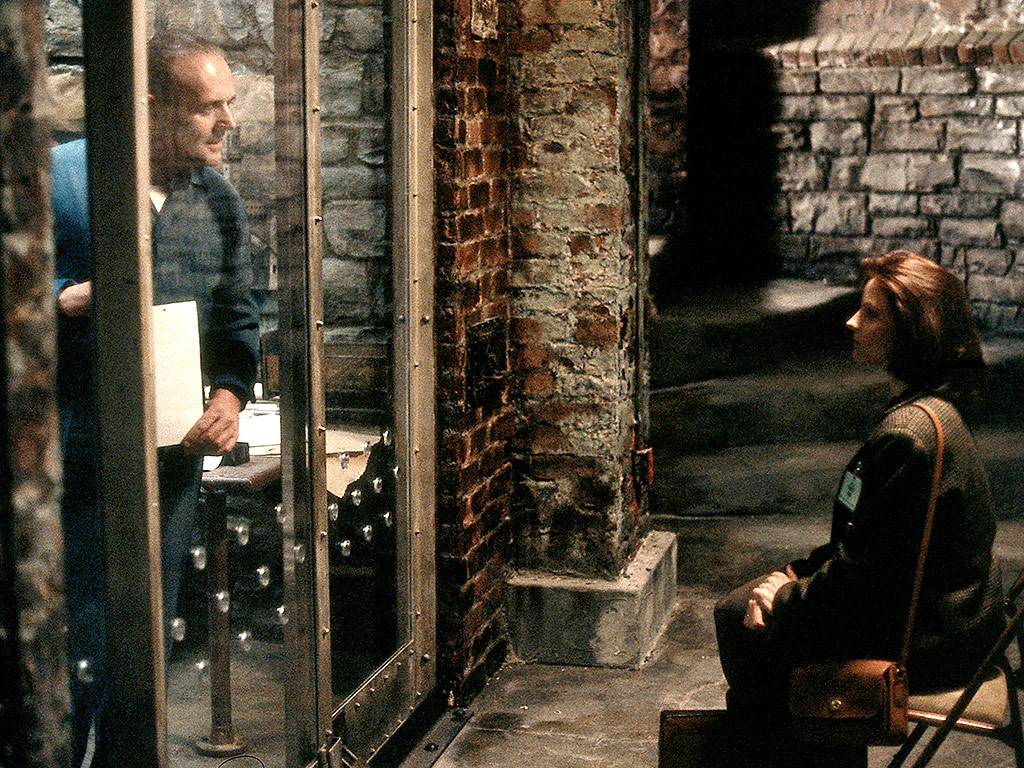
The first act of Silence of The Lambs introduces viewers to a few of the main characters, Clarice Starling, an FBI agent and Hannibal Lecter, a deeply disturbed serial killer. Act one also introduces viewers to the potential conflict of the film, which in this film is the mystery of who and where the serial killer who goes by the nickname of Buffalo Bill, is. Clarice has been assigned to question Hannibal about the newly discovered serial killer and his whereabouts. Unfortunately Clarice does not quite seem to be ready or equipped to pick through the terrifying mind of Hannibal. This character behavior will later result in progressive character development. Act two introduces viewers to a confrontation and disruption in the plot which in the film, Silence of The Lambs, was the confrontation between Clarice and Hannibal when Hannibal admits to knowing who Buffalo Bill is and where he is. From that disruption the mystery of the film becomes captivating for the audience and draws viewers into the search for Buffalo Bill.

silence
“Silence of The Lambs.” People, Drew Mackie , 16 Feb. 2016, people.com/celebrity/silence-of-the-lambs-25-years-later-parodies-homages-and-more/.

This film does an outstanding job in following the Three Act Story Structure using the Alternative Narrative structure throughout the film. One example of the usage of Alternative Narrative in Silence of The Lambs occurs in Act Three. The film undermines the centrality of one of the main characters and events which is the intense escape of Hannibal and then directs the focus of the film to Clarice finding and killing Buffalo Bill. The dramatic and theatrical escape of Hannibal is also the start of the major crisis that results in the peak or highest point in the plot which usually occurs in the shortest act which is Act Three. This use of story telling forces the audience to become captivated in Clarice’s action filled discovery while simultaneously directing the audiences attention away from the fact that Hannibal is still missing. This allows the audience to really become more apart of the film itself since the characters inside the film were busy celebrating Clarice’s achievements instead of worrying about and dealing with the obsessive cannibal serial killer that was still on the loose. In Act Three it is also clear to see how Clarice’s character developed progressively throughout the film. As the viewer can see in act one she is tense and timid when approaching Hannibal and later becomes bold and determined which eventually leads to the death of Buffalo Bill and victory of Clarice’s F.B.I career. Overall this film used incredible examples of the Three- Act- Story Structure which helped the viewers understand the theme of the film and become apart of the story itself.


Requiem For a Dream

In the film Requiem For a Dream directed by Darron Aronofsky, there is an incredible and extremely unique use of editing that helps brings the viewers into the chaotic and drug obsessed world that the film and it’s characters portray. Some of these outstanding editing styles include quick shots, sound editing and montages. Each use of editing is uniquely intentional for setting the tone and theme for this incredibly intense film.

Requiem - Split 1
“Requiem For a Dream Bedroom Scene.” Thoughts On, Daniel Slack, 7 Aug. 2016, danielslackdsu.blogspot.com/2016/07/requiem-for-dream-harry.html.

The picture above is from the film Requiem For a Dream‘s love scene, or bedroom scene. This scene involves Harry and Marion who are both extremely disturbed to due their drug addictions. As shown in the picture above the screen is split showing two different shots of the actor and actress during the same scene. This usage of editing is extremely powerful and gives the viewer a brand new understanding of the internal relationship between the two. By choosing to edit this scene into two separate frames the audience is now able to see just how broken and alone both Harry and Marion are. Throughout the film it is easily inferred that the couples relationship is blooming and it almost seems as if the two are connected. Yet during one of the most intimate scenes between the two characters the split screens allow the viewer to understand that the couple is anything but close. This use of editing is brilliant in portraying that due to their addictions both characters are extremely alone in their minds and cannot seem to to reach each other entirely.

eye
“Requeim For a Dream Eye.” Auralcrave, Mattie Bonasia, 15 Jan. 2018, https://auralcrave.com/en/2018/01/15/requiem-for-a-dream-the-nihilist-fist-in-the-stomach-of-darren-aronofsky/

There is an incredible amount of unique editing scenes in the film Requiem For a Dream however, there is one other scene that stands out the most. The drug montage and sequence scenes use quick editing and time lapse to portray the chaos happening in the drug addicts head. The extremely quick shots include short images of various things such as dealing drugs, a pupil dilating (as seen in the image above), drinking coffee and popping pills. These quick shots are all strung together to create a fast pace and rhythmic montage scene. The fast pace montage scene allows viewers to understand just how fast the characters were becoming addicted and just how quickly their lives were changing because of it. These scenes were extremely powerful and brilliant in placing the viewers into the minds of the films characters. overall this films use of editing was nothing short of brilliant and was crucial in bring the emotions of the film to the audience watching it.

Edward Scissor Hands

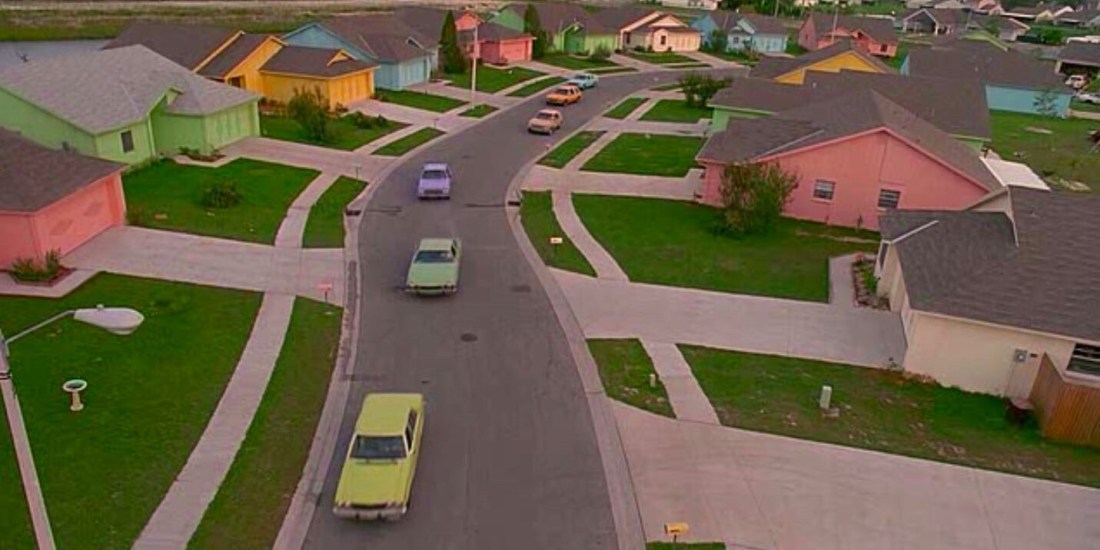
In the film Edward Scissorhands directed by Tim Burton there is a distinct usage of Framing. The film uses framing to set the tone for the film by using colors, emotions and camera angles. This use of cinematography helps the viewer to get a deeper understanding of the film by guiding the viewer and telling them what to focus on. This guidance helps the viewer understand key points in the film and it also helps the viewer understand the tone of the film as well.

“Edward Scissorhands.” Business Insider, Jason Guerrasio, 13 Oct. 2015, http://www.businessinsider.com.au/edward-scissorhands-25th-anniversary-bo-welch-remembers-2015-10.

One example of framing can be found in the picture above. This picture above consists of a long shot at a high angle. This usage of placement helps the viewer to understand how large this neighborhood is and also how symmetrical every house was which relates to how similar every family living there was. The pastels colors also give this neighborhood a simple minded feel which also relates directly to the cookie cutter shaped houses. This neighborhood was very simple and seems to keep a low profile. Portraying this simple lifestyle through framing helps the viewer to understand later on just exactly how big of a disturbance Edward Scissorhand’s presence had on the neighborhood and the people living in it.

Enter a“Edward Scissorhands Dinner Scene.” Hello Giggles, Channing Sargent, 14 Dec. 2016, hellogiggles.com/reviews-coverage/movies/edward-scissorhands-snapchat-lens/. 

The image above is another outstanding example of the framing used in this film. This close up shot of Edward balancing a pea on his scissorhands allows us to feel and understand all of Edward’s emotions. Stefan Czapsky, the Edward Scissorhands cinematographer, intentionally placed Edward’s face and the small pea in the center of the frame. This shot allows us to focus on Edwards face and all the emotions running through him. In this scene he is trying to eat food off of a plate like a normal human however he is unable to grab his food with his scissor hands. Stefan Czapsky, chose this close up shot so the audience could experience Edward’s innocence and concentration as he tries to perform this simple task. The use of framing forces the viewer to focus solely on Edward’s extreme concentration and motivation to do a normal task such as picking up the pea which can be related to his desire to be a normal human in his new home. Overall this film used incredible examples of framing and outstanding works of cinematography that allow the viewers to better understand the tone and the theme of this film. 

Pan’s Labyrinth Review

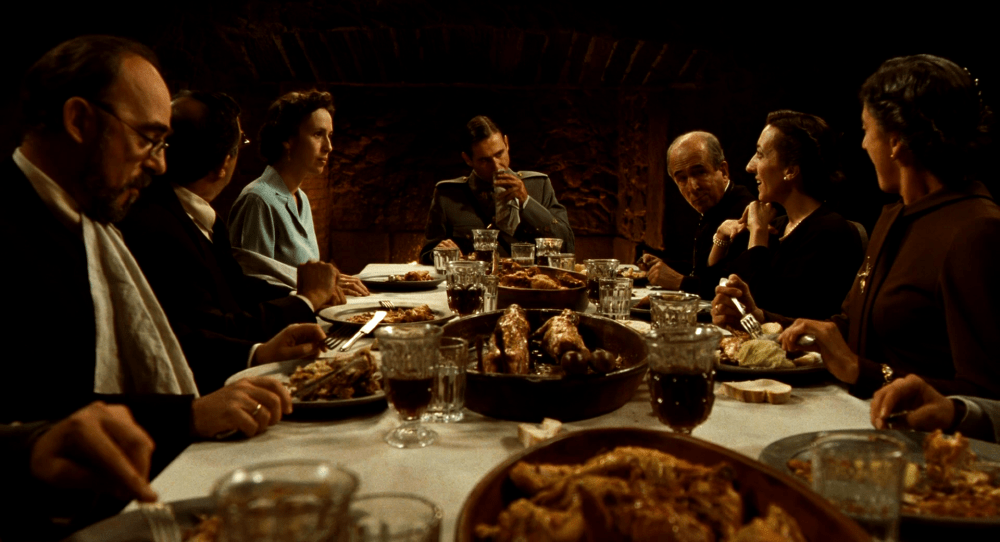
In the film Pan’s Labyrinth directed by Guillermo del Toro there is a distinct usage of mise-en-scene. The film uses a formalism approach to really engaged the viewer and to place the viewer in the dark and twisted world that the film is portraying. One way the film does this is in the very opening scene as the the camera is whirling around and leading viewers into little Ofelias lifeless eyeball as she is bleeding on the ground. This usage of formalism portrays a whimsical yet dark approach to the film which sets the tone of the film and continues throughout it as well. Pan’s Labyrinth, also uses quick scenes, dramatic music and weather forecasts to continue to set the tone of the film and give the viewer a real understanding and to experience the same emotions the characters are experiencing. One way the use of weather is portrayed is through the use of a rainstorm during the dramatic and somber murder scene of the doctor. The use of mise-en sence in Pan’s Labyrinth is also extremely evident in the dinner scene shown below.

dinner
Nite, Angela. “Visual Diary Pan’s Labyrinth.” Cinema 13 , Angela Nite, 14 Nov. 2014, cinemathirteen.blogspot.com/2014/11/visual-sound-diary-pans-labyrinth-2006.html. a caption

The man sitting at the head of the table in uniform would lead viewers to believe he was the chief of some sort and the women sitting on his right would be his spouse. Another inference that can be made based on this picture is the placing of characters. All the people sitting closer to the man at the head of the table are seemingly paying much attention to him. However the man who is not in uniform, the doctor, seems to be having a moment of unease or fear. This placement makes him stand out among the rest who seem to be going normally about their meal.

Pans-Labyrinth-Vidal-e1484837796528
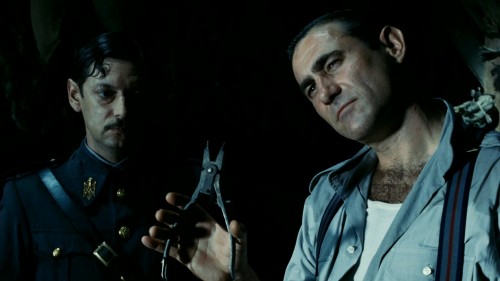
Roberts, James. “Pan’s Labyrinth .” Glide Magazine, James Roberts, 19 Jan. 2017, glidemagazine.com/178554/pans-labyrinth-ten-years-later/.

Another Example of the usage of mise-en-scene in this film is portrayed in the image above. The placement of characters in this image gives viewers the sense that the man closer to the screen has some sort of power over the man in the back. This can be inferred by the way the man in back is dressed. He is well dressed, has good posture and is in a uniform where as the man closer to the screen is dressed rather sloppily and has a slouched posture. The postures and facial expressions of the two men show viewers that the man up front seems to have confidence and power over the frightened skittish looking man in the back. Overall this film used excellence examples of mise-en-scene to engage the viewers into the theme and tone of the film.